Ebook Healing the Shame that Binds You, by John Bradshaw
Use the advanced technology that human establishes today to locate the book Healing The Shame That Binds You, By John Bradshaw conveniently. But initially, we will ask you, how much do you love to read a book Healing The Shame That Binds You, By John Bradshaw Does it constantly until finish? For what does that book review? Well, if you actually love reading, aim to check out the Healing The Shame That Binds You, By John Bradshaw as one of your reading compilation. If you only read the book based on requirement at the time and unfinished, you have to try to such as reading Healing The Shame That Binds You, By John Bradshaw first.
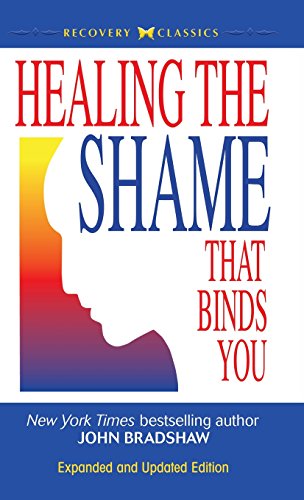
Healing the Shame that Binds You, by John Bradshaw

Ebook Healing the Shame that Binds You, by John Bradshaw
Healing The Shame That Binds You, By John Bradshaw. Someday, you will find a new adventure and also expertise by investing even more cash. But when? Do you assume that you should obtain those all requirements when having much cash? Why do not you try to get something easy at initial? That's something that will lead you to recognize more concerning the globe, adventure, some places, past history, entertainment, as well as much more? It is your personal time to proceed checking out habit. Among guides you can appreciate now is Healing The Shame That Binds You, By John Bradshaw right here.
As one of guide collections to suggest, this Healing The Shame That Binds You, By John Bradshaw has some strong factors for you to read. This book is extremely suitable with just what you require now. Besides, you will likewise enjoy this book Healing The Shame That Binds You, By John Bradshaw to check out considering that this is one of your referred publications to check out. When getting something new based upon encounter, home entertainment, and other lesson, you could utilize this publication Healing The Shame That Binds You, By John Bradshaw as the bridge. Starting to have reading behavior can be gone through from different methods and from variant kinds of books
In checking out Healing The Shame That Binds You, By John Bradshaw, currently you might not likewise do traditionally. In this contemporary period, device and also computer will certainly aid you a lot. This is the time for you to open the gadget and stay in this website. It is the ideal doing. You could see the link to download this Healing The Shame That Binds You, By John Bradshaw right here, can't you? Just click the web link and negotiate to download it. You can reach buy guide Healing The Shame That Binds You, By John Bradshaw by on the internet and also prepared to download and install. It is extremely various with the typical way by gong to guide establishment around your city.
Nevertheless, checking out the book Healing The Shame That Binds You, By John Bradshaw in this site will certainly lead you not to bring the printed publication anywhere you go. Simply save the book in MMC or computer disk as well as they are available to read at any time. The flourishing air conditioner by reading this soft data of the Healing The Shame That Binds You, By John Bradshaw can be leaded into something new routine. So now, this is time to confirm if reading can enhance your life or not. Make Healing The Shame That Binds You, By John Bradshaw it undoubtedly function as well as obtain all benefits.
In an emotionally revealing way John Bradshaw shows us how toxic shame is the core problem in our compulsions, co-dependencies, addictions and the drive to super-achieve. The result is a breakdown in the family system and our inability to go forward with our lives. We are bound by our shame. Drawing from his 22 years of experience as a counselor, Bradshaw offers us the techniques to heal this shame. Using affirmations, visualizations, "inner voice" and "feeling" work plus guided meditations and other useful healing techniques, he releases the shame that binds us to the past. This important book breaks new ground in the core issues of societal and personal breakdown, offering techniques of recovery vital to all of us.
- Sales Rank: #412739 in Books
- Published on: 2015-08-01
- Original language: English
- Number of items: 1
- Dimensions: 8.50" h x .81" w x 5.51" l, 1.18 pounds
- Binding: Hardcover
- 338 pages
About the Author
John Bradshaw has been at the forefront of the self-development and recovery field for more than ten years. He has helped millions of people improve their lives through his ongoing lecture series, his nationally broadcast public television series and his bestselling books.
Excerpt. � Reprinted by permission. All rights reserved.
PART I
The Problem―
Spiritual Bankruptcy
�
�
We have no imagination for Evil, but Evil has us in its grip.
―C. G. Jung
Introduction: Shame as Demonic (The Internalization Process)
����As I've delved deeper into the destructive power of toxic shame, I've come to see that it directly touches the age-old theological and metaphysical discussion generally referred to as the problem of evil. The problem of evil may be more accurately described as the mystery of evil. No one has ever explained the existence of evil in the world. Centuries ago in the Judeo-Christian West, evil was considered the domain of the Devil, or Satan, the fallen angel. Biblical scholars tell us that the idea of a purely evil being like the Devil or Satan was a late development in the Bible. In the book of Job, Satan was the heavenly district attorney whose job it was to test the faith of those who, like Job, were specially blessed.
����During the Persian conquest of the Israelites, the Satan of Job became fused with the Zoroastrian dualistic theology adopted by the Persians, where two opposing forces, one of good, Ahura Mazda, the Supreme Creator deity, was in a constant battle with Ahriman, the absolute god of evil. This polarized dualism was present in the theology of the Essenes and took hold in Christianity where God and his Son Jesus were in constant battle with the highest fallen angel, Satan, for human souls. This dualism persists today only in fundamentalist religions (Muslim terrorists, the Taliban, the extreme Christian Right and a major part of evangelical Christianity).
����The figure of Satan and the fires of hell have been demythologized by modern Christian biblical scholars, theologians and �philosophers.
����The mystery of evil has not been dismissed by the demythologizing of the Devil. Rather, it has been intensified in the twentieth century by two world wars, Nazism, Stalinism, the genocidal regime of the Khmer Rouge in Cambodia, and the heinous and ruthless extermination of Tibetans and Tibetan Buddhism by Pol Pot. These reigns of evil form what has been called a collective shadow, and it has been shown how na�ve and unconscious the people of the world have been in relation to these evils.
����The denial of evil seems to be a learned behavior. The idea of evil is always subject to denial as a coping mechanism.
����Evil is real and is a permanent part of the human condition. 'To deny that evil is a permanent affliction of humankind,' says the philosopher Ernst Becker in his book Escape from Evil, 'is perhaps the most dangerous kind of thinking.' He goes on to suggest that in denying evil, humans have heaped evil on the world. Historically, great misfortunes have resulted from humans, blinded by the full reality of evil, thinking they were doing good but dispensing miseries far worse than the evil they thought to eradicate. The Crusades during the Middle Ages and the Vietnam War are �examples that come to mind.
����While demons, Satan and hellfire have been demythologized by any critically thinking person, the awesome collective power of evil remains. Many theologiams and psychologists refer to evil as the demonic in human life. They call us to personal wholeness and self-awareness, especially in relation to our own toxic shame or shadow, which goes unconscious and in hiding because it is so painful to bear. These men warn against duality and polarization. 'We must beware of thinking of Good and Evil as absolute opposites,' writes Carl Jung. Good and evil are potentials in every human being; they are halves of a paradoxical whole. Each represents a judgment, and 'we cannot believe that we will always judge rightly.'
����Nothing can spare us the torment of ethical decision. In the past, prior to the patriarchies of Hitler, Stalin and Pol Pot, it was believed that moral evaluation was built and founded on the certitude of a moral code that pretended to know exactly what is good and what is evil. But now we know how any patriarchy, even religious ones, can make cruel and violent decisions. Ethical decision is an uncertain and ultimately a creative act. My new book on moral intelligence calls these patriarchies 'cultures of obedience,' and presents an ethics of virtues as a way to avoid such moral totalism. The Jews who killed their Nazi guards or SS troopers coming to search their homes are now considered ethically good, no matter what the absolutist moral code says about killing. There is a structure of evil that transcends the �malice of any single individual. The Augustinian priest Gregory Baum was the man I first heard call it 'the demonic.'
����It can begin with the best of intentions, with a sincere belief that one is doing good and fighting to eradicate evil, as in the Vietnam War―but it ends with heinous evil. 'Life consists of achieving Good, not apart from Evil, but in spite of it,' says the psychologist Rollo May. There is no such thing as pure good in human affairs. Those who claim it are seriously deluded and will likely be the next perpetrators of evil.
����As I pointed out in the preface to this revised edition, the affect shame has the potential for the depths of human evil or the heights of human good. In this regard shame is demonic. 'The daimonic,' says the psychologist Steven A. Diamond, 'is any natural function which has the power to take over the whole person.' Shame is a natural feeling that, when allowed to function well, monitors a person's sense of excitement or pleasure. But when the feeling of shame is violated by a coercive and perfectionistic religion and culture―especially by shame-based source figures who mediate religion and culture―it becomes an all-embracing identity. A person with internalized shame believes he is inherently flawed, inferior and defective. Such a feeling is so painful that defending scripts (or strategies) are developed to cover it up. These scripts are the roots of violence, criminality, war and all forms of addiction.
����What I'll mainly describe in the first part of this book is how the affect shame can become the source of self-loathing, hatred of others, cruelty, violence, brutality, prejudice and all forms of destructive addictions. As an internalized identity, toxic shame is one of the major sources of the demonic in human life.
�
�
�
1
The Healthy Faces
of Shame (HDL Shame)
�
Everyone needs a sense of shame,
but no one needs to feel ashamed.
―Frederick Nietzsche
�
����Because of its preverbal origins, shame is difficult to define. It is a healthy human feeling that can become a true sickness of the soul. Just as there are two kinds of cholesterol, HDL (healthy) and LDL (toxic), so also are there two forms of shame: innate shame and toxic/life-destroying shame. When shame is toxic, it is an excruciatingly internal experience of unexpected exposure. It is a deep cut felt primarily from the inside. It divides us from ourselves and from others. When our feeling of shame becomes toxic shame, we disown ourselves. And this disowning demands a cover-up. Toxic shame parades in many garbs and get-ups. It loves darkness and secretiveness. It is the dark, secret aspect of shame that has evaded our study.
����Because toxic shame stays in hiding and covers itself up, we have to track it down by learning to recognize its many faces and its many distracting behavioral cover-ups.
SHAME AS A HEALTHY HUMAN FEELING
����The idea of shame as healthy seems foreign to English-speaking people because we have only one word for shame in English. To my knowledge, most other languages have at least two words for shame (see Figure 1.1).
�
FIGURE 1.1
The Languages of Shame
������������� DISCRETION���������������������������� DISGRACE
����������� Before an Action������������������������ After an Action
������������� HDL SHAME��������������������������� LDL SHAME
�
��� Latin�������� Pudor �������������������������� Latin�������� Foedus
������������������� Verecundia����������������������������������� Macula
�
��� Greek������ Entrope������������������������� Greek������ Aischyne
������������������� Aidos��������������������������������������������
�
��� French����� Pudeur�������������������������� French����� Honte
�
��� German��� Scham�������������������������� German��� Schande
�
�
ANnibale POCATERRA
����The earliest treatise on shame was written by Annnibale Pocaterra, born in 1562. My awareness of Pocaterra's book, Two Dialogues on Shame, came from Donald Nathanson's comprehensive book Shame and Pride. According to Nathanson, Pocaterra wrote his book on shame at age thirty. His book was the only scholarly work on shame until Darwin wrote about it three hundred years later. Pocaterra died a few months after publishing his book. Only thirty-eight copies are known to exist today. Nathanson owns one of them, and I'm indebted to him for what follows (see Shame and Pride, pages 443–445).
����In the beginning of his book, Pocaterra tells us that 'in the end shame is a good thing, a part of everyday existence.' Shame, according to Pocaterra, makes us timorous, humble and contrite and causes outrage against the self.
����When we are attacked by shame, Pocaterra says we 'would like nothing better than to run and hide from the eyes of the world.' He also describes shame as the 'fear of infamy,' which can lead a person to attack his enemy with passion. Shame is thus capable of both cowardice and bravery. Long before Silvan Tomkins's treatise on shame, Pocaterra posited that our emotions are innate and that 'they are only good or evil as the end to which they are used.' There is an innate and a learned component to all emotion. 'Therefore,' Pocaterra writes, 'there must be two shames, one natural and free from awareness and the other acquired.'
����Pocaterra understood shame to be our teacher. He thought the shame of children was like a seed that will become a small plant in youth and leads to virtue at maturity. Pocaterra looked at blushing as the external sign of shame and believed that blushing was both the recognition of having made a mistake as well as the desire to make amends. Three hundred years later Darwin would posit blushing as that which distinguishes us from all other animals. Darwin knew that the mother of the blush was shame. For Darwin, shame defines our essential humanity. Silvan Tomkins views shame as an innate feeling that limits our experience of interest, curiosity and pleasure.
SHAME AS PERMISSION TO BE HUMAN
����Healthy shame lets us know that we are limited. It tells us that to be human is to be limited. Actually, humans are essentially limited. Not one of us has, or can ever have, unlimited power. The unlimited power that many modern gurus offer is false hope. Their programs calling us to unlimited power have made them rich, not us. They touch our false selves and tap our toxic shame. We humans are finite, 'perfectly imperfect.' Limitation is our essential nature. Grave problems result from refusing to accept our limits.
����Healthy shame is an emotion that teaches us about our limits. Like all emotions, shame moves us to get our basic needs met.
EGO BOUNDARIES
����One of our basic needs is structure. We ensure our structure by developing a boundary system within which we safely operate. Structure gives our lives form. Boundaries offer us safety and allow more efficient use of energy.
There is an old joke about the man who 'got on his horse and rode off in all directions.' Without boundaries we have no limits and are easily �confused. We go this way and that, wasting a lot of energy. We lose our way or become addicted because we don't know when to stop; we don't know how to say no.
����Healthy shame keeps us grounded. It is a yellow light, warning us of our essential limitations. Healthy shame is the basic metaphysical boundary for human beings. It is the emotional energy that signals us that we are not God―that we will make mistakes, that we need help. Healthy shame gives us permission to be human.
����Healthy shame is part of every human's personal power. It allows us to know our limits, and thus to use our energy more effectively. We have better direction when we know our limits. We do not waste ourselves on goals we cannot reach or on things we cannot change. Healthy shame allows our energy to be integrated rather than diffused.
THE DEVELOPMENTAL STAGE
OF HEALTHY (HDL) SHAME
����Figure 1.2 gives an overview of how the feeling of shame expands and grows over our lifetime. The chart is epigenetic, meaning that each stage builds upon and retains the previous stage.
����We need to know from the beginning that we can trust the world. The world first comes to us in the form of our primary caregivers. We need to know that we can count on someone to be there for us in a humanly predictable manner. If we had a caregiver who was mostly predictable, and who touched us and mirrored all our behaviors, we developed a sense of basic trust. When security and trust are present, we begin to develop an interpersonal bond, which forms a bridge of empathic mutuality. Such a bridge is crucial for the development of self-worth. The only way a child can develop a sense of self is through a relationship with another. We are 'we' before we are 'I.'
����In this earliest stage of life, we can only know ourselves in the mirroring eyes of our primary caregivers.
�
FIGURE 1.2
Developmental Stages of Healthy (HDL) Shame
�
Transcendence������������ -Shame as wisdom, knowing what is valuable and what is not worth your time.
���������������������������������� Older Age
���������������������������������� -Shame as the experience of the numinous sacred holy & knowing a higher power. Shame as the source and safeguard of spirituality.
Inter-�������������������� -Adult
dependence������� Experience of life's limits―suffering and death.
���������������������������������� -Shame as knowing you don't know it all―openness to novelty/creativity.
���������������������������������� Young Adult
���������������������������������� -New secure attachment figure―love as exposing your vulnerable self. Shame as modesty.
independence��� Puberty
���������������������������������� -Shame experienced as limits to self-identity.������������
-Shame limits mental curiosity―studiasitas (temperance of the mind).
���������������������������������� Puberty
���������������������������������� -Emergence of the sex drive experienced as awesome. Healthy shame monitors sex drive. Shame is dominant in peer group acceptance.
���������������������������������� 8–Puberty
���������������������������������� -Shame as inferiority experienced as limits to one's abilities―social shame related to ethnicity, gender, status.
���������������������������������� 8–Puberty
���������������������������������� -Shame as embarassment coming from making mistakes, especially neighborhood social play―juvenile sex play―social shame as related to belonging.
���������������������������������� 3.5–8 Years
���������������������������������� -guilt as moral shame, the internalized parental rules and voices that form conscience. Early sexual curiosity―manners and modesty.
counter-������������� 18 Months–3.5 Years
dependence������� -full affect of shame experienced as limits put on child's autonomous need to separate and do things his or her own way.
���������������������������������� 6–18 Months
���������������������������������� -Shame as limits to curiosity and interest―when children get into trouble they often hide their eyes.
interpersonal� 6 Months
bridge������������������� Once securely attached―shame as shyness appears as a response
established��������� to being exposed to strange faces.
codependence����
THE INTERPERSONAL BRIDGE
����The relationship between child and caregiver gradually evolves out of �reciprocal interest, along with shared experiences of trust. Actually, trust is fostered by the fact that we come to expect and rely on the mutuality of response. As trust grows, an emotional bond is formed. The emotional bond allows the child to risk venturing out to explore the world. This bond becomes an interpersonal bridge between child and caregiver. The bridge is the foundation for mutual growth and understanding. The interpersonal bridge is strengthened by certain experiences we have come to accept and depend on. The other person, our primary caregiver, becomes significant in the sense that that person's love, respect and care for us really matter. We allow ourselves to be vulnerable in that we allow ourselves to need the other person.
SHAME AS SHYNESS
����Once basic trust has been established, the child's feeling of shame emerges. The first appearance of the feeling of shame usually occurs at about six months. At that age, a child has become familiar with his or her mother's face. When a strange face (maybe a relative seeing the baby for the first time) appears, the infant experiences shame as shyness in looking at the strange face.
����Some children are temperamentally shy and withdrawn. But all of us experience some shyness in the presence of what is unfamiliar.
SHAME AS A LIMIT TO CURIOSITY:
THE DEVELOPMENT OF HEALTHY SHAME
SIX MONTHS TO EIGHTEEN MONTHS:
����At about six to eighteen months of age, a child begins to develop musculature. He needs to establish a balance between 'holding on and letting go.' The earliest muscle development focuses on crawling and then gaining balance when standing up and walking. This triggers the desire to roam and explore, and in order to roam and explore, the child needs to separate from his primary caregivers. The early exploratory stage is characterized by touching, tasting and examining the many fascinating aspects of the environment. Children lack coordination and knowledge. My grandson Jackson loved to dunk his head into the toilet at this stage. When he was stopped from doing something (like throwing his train into the TV) he hid his eyes. Six- to eighteen-month-olds are magical in their thinking. When Jackson hid his eyes, we disappeared. In his magical mind, if he couldn't see us, then we couldn't see him. Hiding the eyes is characteristic of shame because shame guards against overexposure. When we are exposed without any way to protect ourselves, we feel the pain of shame. If we are continually overexposed, shame becomes toxic.
EIGHTEEN MONTHS TO THREE AND A HALF YEARS:
����The psychologist Erik Erikson says that the psychosocial task at this stage of development is to strike a balance between autonomy and shame and doubt. This stage (eighteen months to three and a half years) has been called 'the terrible twos' because children begin to explore by touching, tasting and testing. Two-year-olds are in a counterdependent stage. They need to separate and are stubborn. They want to do it their way (always within eyesight of their caregiver). When two-year-olds are thwarted (like every three minutes), they have intense anger and temper tantrums. At this stage the child needs to take possession of things in order to test them by purposeful repetition. The world is brand new―sights, sounds and smells all have to be assimilated through repeated experience.
THE CHILD'S NEEDS
����This stage has also been referred to as 'second' or 'psychological' birth. The child is beginning to separate. Saying 'no' and 'it's mine' and throwing temper tantrums are the first testing of boundaries. What a child needs most is a firm but understanding caregiver, who in turn needs to have her own needs met through her spouse and her own resources. Such a caregiver needs to have resolved the issues in her own source relationships and needs to have a sense of self-responsibility. When this is the case, such a caregiver can be available to the child and provide what the child needs. No parent is perfect and none can do this perfectly. They simply need to be 'good enough.'
MODELS
����The child needs good modeling of healthy shame and other emotions. The child needs the caregiver's time and attention. Above all, the child needs the caregiver to model good boundaries. A child needs to have a caregiver available to set limits and express anger in a nonshaming way. Outer control must be firmly reassuring. Dr. Maria Montessori found that a 'prepared environment' takes the heat off the parents. The prepared environment is developmentally geared to the child's unique needs at each stage of development. These needs were called 'sensitive periods' by Dr. Montessori. The child needs to know that the interpersonal bridge will not be destroyed by his new urge for doing things his own way―his new urge toward autonomy. Erikson writes in Childhood and Society:
�
����Firmness must protect him against the potential anarchy of his yet untrained sense of discrimination, his inability to hold on and to let go with discretion.
�
����If a child can be protected by firm but compassionate limits, if he can explore, test and have tantrums without the caregiver's withdrawal of love, i.e., withdrawal of the interpersonal bridge, then the child can develop a healthy sense of shame. It may come as the child's embarrassment over his normal human failures, or as timidity and shyness in the presence of strangers, or as the beginning feeling of guilt as the child internalizes his parents' limits on excitement and pleasure. This sense of shame is crucial and necessary as a balance and limit for one's newfound autonomy. Healthy shame signals us that we are not omnipotent.
����Our shyness is always with us as we encounter strangers or strange new experiences. The stranger, by definition, is one who is 'un-family-iar.' The stranger is not of our family. The stranger poses the threat of the unknown. Our shyness is our healthy shame in the presence of a stranger. Like all emotions, shyness signals us to be cautious, to take heed lest we be wounded or exposed. Shyness is a boundary that guards our inner core in the presence of the unfamiliar stranger.
����Shyness can become a serious problem when it is rooted in toxic shame.
SHAME AS GUILT
����Healthy guilt is moral shame. The rules and limits children have experienced from their caregivers or from the environment are internalized and become an inner voice that guides and limits behavior. Guilt is the guardian of conscience, and children begin to form their conscience during the preschool period.
SHAME AS EMBARRASSMENT AND BLUSHING
����As preschool children grow older, they begin to explore their own �bodies and their gender identity. Their healthy shame is the foundation for developing manners and a sense of modesty. A child's manners and modesty become a more sophisticated and complex guide that triggers shame as embarrassment and blushing. Preschool and school-age children become more social and have more occasion for unexpected exposure that leads to embarrassment and blushing.
����In an embarrassing situation one is caught off guard―one is exposed when one is not ready to be exposed. One feels unable to cope with some situation in the presence of others. It may be an unexpected physical clumsiness, an interpersonal sensitivity or a breach of etiquette.
����In such situations we experience the blush of healthy shame. Blushing manifests the exposure, the unexpectedness, the involuntary nature of shame.
����In On Shame and the Search for Identity Helen Lynd writes, 'One's feeling is involuntarily exposed; one is uncovered.'
����Blushing is the manifestation of our human limits. The ability to blush is a metaphor for our essentially limited humanity. With blushing comes the impulse to 'cover one's face,' 'bury one's face,' 'save face,' or 'sink into the ground.' With blushing we know we've made a mistake. Why would we have such a capacity if mistakes were not part of our essential nature? Blushing as a manifestation of healthy shame keeps us grounded. It reminds us of our core human boundary. It is a signal for us not to get �carried away with our own excellence.
SHAME AS THE SOURCE OF
CREATIVITY AND LEARNING
����I once did a workshop with Richard Bandler, one of the founders of NeuroLinguistic Programming (NLP). It was a very powerful experience. I've never forgotten one aspect of that experience. Richard asked us to think of a time in our lives when we knew we were right. After a few seconds, I remembered an incident with my former wife. He asked us to go over the experience in our memory. Then he asked us to make a movie of the experience: to divide it into acts and to run it as a film. Then he asked us to run the film backward. Then we were to run the acts out of sequence: the �middle act first, the last act in the middle, etc. Then we were to run through the experience again as we had done it the first time. We were to pay exquisite attention to the details of the experience and to the feeling of rightness.
����By the time I reran the experience, it no longer had the voltage it had the first time. In fact, I hardly felt anything of the initial intensity. Richard was introducing us to a form of internal remapping called submodality work. But that was not important for me. What was important for me was a statement Richard made about creativity. For me, the greatest human power is the creative power.
HEALTHY INFERIORITY
����Richard Bandler suggested that one of the major blocks to creativity was the feeling of knowing you are right. When we think we are absolutely right, we stop seeking new information. To be right is to be certain, and to be certain stops us from being curious. Curiosity and wonder are at the heart of all learning. Plato said that all philosophy begins in wonder. So the feeling of absolute certainty and righteousness causes us to stop seeking and learning.
����Our healthy shame, which is a feeling of our core boundaries and limitedness, never allows us to believe we know it all. Our healthy shame is nourishing in that it moves us to seek new information and learn new things. Inferiority can be experienced as a healthy limit to our abilities.
SHAME AS THE BASIC NEED
FOR COMMUNITY―SOCIAL SHAME
����There is an ancient proverb that states, 'One man is no man.' This saying underscores our basic human need for community, which underscores our need for relationships and social life. Not one of us could have made it without someone being there for us. Human beings need help. Not one of us is so strong that he does not need love, intimacy and dialogue in �community.
����We will need our parents for another decade before we are ready to leave home. We cannot get our needs met without depending on our primary caregivers. Our healthy feeling of shame is there to remind us that we often need help. No human being can make it alone. Even after we have achieved some sense of mastery, even when we are independent, we will still have needs. We will need to love and grow. We will need to care for another, and we will need to be needed. Our shame functions as a healthy signal that we need help, that we need to love and be in caring relationships with others.
����Without the healthy signal of shame, we would not be in touch with our core dependency needs.
SCHOOL AGE
����Social shame emerges as the school-age child becomes aware of social difference and the culture's norms for beauty and success. Financial status, ethnicity, intelligence, popularity, physical appearance, athletic ability and talent all contribute to a person's sense of shame. Many of our cultural norms become occasions for toxic shame. But if children have a good, loving home with parents who model spiritual values, they can sift through the social garbage.
PUBERTY―SEXUAL SHAME
����As the sex drive fully emerges, the feeling of shame becomes more activated than at any other time in the life cycle. The initial experience of sexuality is one of awe and strangeness. Today we have lost what the ancients called the phallic and vaginal mysteries. Thomas Moore writes poignantly about the mystery of sexuality in his book The Soul of Sex. In our shameless culture, sex has been depersonalized. It has become a fact, not a sacred value. Parents need to model and teach an awe and reverence for their own and their children's sexuality.
SHAME AS AN AFFECT AUXILLARY
����In the new preface I mention that the foundation for this book is Silvan Tompkins's theory of the affect system and shame as an affect auxillary. This means that shame monitors excitement and pleasure. Nature has made the sexual experience the most exciting and pleasurable of all our experiences. Nature wants us to mate and procreate. Sex and shame go hand in hand because we need our sense of shame as a boundary for our sexual desires.
����Adolescence is the time when the major biological transformation from child to adult is taking place. It is the time a person feels most exposed. Embarrassment is so excruciatingly painful in adolescence that teenagers are diligently on guard to protect themselves while projecting on others.
����Belonging to the peer group is paramount. One's whole sense of identity is coming together in adolescence. If one has a good foundation prior to adolescence, the sense of self can be preliminarily defined. Identity is always social―one's sense of self needs to be matched by others: one's friends, teachers and parents. Adolescence is the time the brain (frontal lobes) is reaching full maturity. It is a time of ideals, of questioning and projecting into the future. An adolescent needs to have the discipline of mind the philosopher Thomas Aquinas called studiasitas. Studiasitas is a disciplined focus on studies and thinking, a kind of temperance of the mind. Its opposite is curiositas, a kind of mental wandering all over the place without limits.
����Healthy shame at this stage is the source of good identity, a disciplined focus on the future and on studious limits in pursuing intellectual interests.
LOVE (ATTACHMENT)
����The power of the interpersonal bridge, along with a sense of identity, form the foundation for a healthy adult love relationship. A toxically shamed person is divided within himself and must create a false-self cover-up to hide his sense of being flawed and defective. You cannot offer yourself to another person if you do not know who you really are.
CONNECTING BEHAVIOR
����Having a secure attachment with one's source figures, and having developed a sense of self-worth, a person feels he is loveable and wants to love another. A securely attached person with a solid sense of self is �capable of connecting with another in an intimate relationship. Intimacy requires vulnerability and a lack of defensiveness. Intimacy requires healthy shame.
����Most people have a way to go in terms of developing intimacy and connecting skills when they get married or enter a long-term relationship. But the great thing about a committed relationship is that the relationship itself is a form of therapy. If both partners are committed, most of their differences can be worked out and even appreciated. Shame as the root feeling of humility allows each partner to appreciate and accept the other's foibles and idiosyncrasies. Knowing and accepting my own limitations allows me to accept my perceptions of my partner's limitations. Giving and receiving unconditional love is the most effective and powerful way to personal wholeness and happiness.
CREATIVITY AND GENERATIVITY
����It has been said that creative people see more in any given reality than others see. The more they have healthy shame as the core of humility and modesty, the more they know that what they know is a tiny fraction of what there is to know. A person with humility shame is open to new discovery and learning. When a person with curiosity and interest has discipline available to him, he has the right formula for creativity. The philosopher Nietzsche spoke of the creative act as involving both Dionysian and Apollonian elements. The Dionysian represents the passionate interest and desire to learn. The Apollonian represents the form and structure that must guide any truly creative act. Music is limited by the diatonic scale, and poetry is limited by words and the forms of poetic cadence. The world is full of people with good ideas and fantasies that never come to fruition because they don't have disciplined limits.
GENERATIVITY
����A person need not write music or poetry in order to be generative. Caring parents are generative; planting flowers and trees and caring for all life forms are generative behaviors. Being in a business that makes useful products that enhance the quality of life is generative work.
����Toxically shamed people tend to become more and more stagnant as life goes on. They live in a guarded, secretive and defensive way. They try to be more than human (perfect and controlling) or less than human (losing interest in life or stagnated in some addictive behavior).
SHAME IS AWE AND REVERENCE
����Healthy shame is the source of awe and reverence when experiencing the immensity and mystery of life. Life is a mystery to be lived. Whether it be looking out at the immensity of space on a starry night, or experiencing the phallic and vaginal mysteries, or experiencing your own offspring being conceived, born and growing in their own unique way, or marveling at the mysteries of scientific discovery or the unexplained miracles that occur throughout our lives―all of this gives us pause and moves us to experience our own littleness in the face of the enormity of reality.
SHAME AS THE NUMINOUS
����Shame as awe and reverence leads directly to what the theologian Rudolf Otto called the idea of the holy. Otto studied the theophanies (the appearances of God) in all the sacred books of the world's religions. He defined the experience of holy God as the uncanny, and he called the uncanny a numinous experience, which he described as 'the mysterium tremendum et fascinans'―the mystery that attracts us with passionate fascination but which is fearful at the same time. Anyone who has nurtured healthy shame and experienced awe and reverence for the immensity of life must acknowledge the numinous. 'Woe to them who speak of God,' said St. Augustine, 'yet mute is even elegant.' We cannot experience our own finite limitations without questioning the meaning and purpose of life. And we cannot escape the common sense conclusion there are many higher powers that shape our lives. Many people call their higher power God. The great Lutheran theologian Paul Tillich suggested that because personal love and intimacy is the highest form of creaturely life, then the creator cannot be less than personal.
SHAME AS THE SOURCE OF SPIRITUALITY
����In The Farther Reaches of Human Nature, Abraham Maslow, the pioneering third force psychologist, once wrote:
����The spiritual life is . . . part of the human essence. It is a defining characteristic of human nature . . . without which human nature is not full human nature.
�
����Spirituality embraces the numinous (the holy). Spirituality has to do with an inner life of values and meaning. It also has to do with our �finitude―our awe and reverence for the mysteries of life. Spirituality is about love, truth, goodness, beauty, giving and caring. Spirituality is about wholeness and completion. Spirituality is our ultimate human need. It pushes us to transcend ourselves and become grounded in the ultimate source of reality.
����Our healthy shame is essential as the foundation of our spirituality. By reminding us of our essential limitations, our healthy shame lets us know that we are not God. Our healthy shame points us in the direction of some larger meaning. Our healthy shame is the psychological ground of our humility.
�2005. John Bradshaw. All rights reserved. Reprinted from Healing the Shame that Binds You. No part of this publication may be reproduced, stored in a retrieval system or transmitted in any form or by any means, without the written permission of the publisher. Publisher: Health Communications, Inc., 3201 SW 15th Street, Deerfield Beach, FL 33442.
Most helpful customer reviews
107 of 109 people found the following review helpful.
Real breakthrough
By Ana F
Ah. So It has a name. That feeling that follows us through years and years, that keeps eating at us and deteriorating our life. At first you double the efforts to keep on functioning and achieving ("put your back into it!"). Some achievements come with that. But you feel increasingly drained, fearful of disasters and failure (which can lead you smack into some of them btw), and just so gd tired. And weirdly empty, disconnected and phony even to yourself. Soooo.... bit by bit you keep on trying to quench that nagging dissatisfied thirst with... well, just plain more. More work. More "fun" (a world of problems here, none of them fun at all). More money. More shoes. And always thinking "when I get that new (i) car (ii) job (iii) promotion (iv) title (v) ring etc etc etc, I'll feel better. More serene and real. I'll find "my" place, where I "belong"".
One therapist once told me that this sounded like "when I grow up...". I never forgot that.
This book is important. To me, it was an absolute revelation.
If you identify with anything I wrote above, check this book out. It brings an almost immediate feeling of relief. What happens after the first eureka moment is up to each one of us and our individual stories. But, as a group, it's like realizing your symptons are documented and part of a disease that afflicts a lot of people and not just you - and which CAN be treated; which has nothing to do with your real identity.
And that place? Where we belong? It's right there inside each of us, patiently waiting for us to come back. I'm trying to find my own way back, and this book was the most precise and clearest "guide" I found so far. For the first time in my life, I feel like I'm on my way. Using the right road and all. At the right pace.
I do wish I had come across this before. But then again, time and place for everything, right?
4 of 4 people found the following review helpful.
As you can imagine when I got to that point in the book and read about it I was greatly amazed: ) I almost have the feeling that
By Steven Smith
I had only learned the concept of toxic shame just this year online. The online source I learned it from was lacking in terms of solutions though. This book does both well in my opinion, it describes the problem, and solutions. I found it very ironic when I started reading this book because after learning about the existence of toxic shame I had started doing the first few steps to fix the problem that he suggested in this book. As you can imagine when I got to that point in the book and read about it I was greatly amazed :) I almost have the feeling that God was guiding me in my recent life to help me with my psychological issues. You don't have to be religious to do what this book says though, and in fact it will tell you that if you are built in toxic shame you CANNOT be religious, and his solutions do not require religion at any step of the process.
I had taken medicine and had even gone to a therapist with my psychological concerns and never felt that any progress was made. Some of the things suggested as solutions in this book were suggested to me by the therapist but he didn't really explain things in a way that got me motivated like this book did. I think you have to have a basic understanding of the problem before you can start work to fix it. That's the thing with toxic shame: hearing what you are doing wrong won't help, it just reinforces it, makes it worse. You have to understand that the toxic shame is the SOURCE of the problem before you can take steps to solve it.
2 of 2 people found the following review helpful.
A good beginning to shame recovery
By Philip J Barner
I found this book to be very helpful as a starting point to examine my shame and the shame around me in others. Bradshaw does a good job of referencing many methods and approaches to begin to deal with shame. I found that I needed and valued deeper work with a counselor and other resources but i would recommend this as a great start to begin the journey of recovery from shame
See all 322 customer reviews...
Healing the Shame that Binds You, by John Bradshaw PDF
Healing the Shame that Binds You, by John Bradshaw EPub
Healing the Shame that Binds You, by John Bradshaw Doc
Healing the Shame that Binds You, by John Bradshaw iBooks
Healing the Shame that Binds You, by John Bradshaw rtf
Healing the Shame that Binds You, by John Bradshaw Mobipocket
Healing the Shame that Binds You, by John Bradshaw Kindle
Healing the Shame that Binds You, by John Bradshaw PDF
Healing the Shame that Binds You, by John Bradshaw PDF
Healing the Shame that Binds You, by John Bradshaw PDF
Healing the Shame that Binds You, by John Bradshaw PDF


![[(The First Four Years )] [Author: Laura Ingalls Wilder] [Jun-1971], by Laura Ingalls Wilder](https://lh3.googleusercontent.com/blogger_img_proxy/AEn0k_v1Ul9eFdnf3WmevZ8znXAXEX7IUcxxM__b6h9kKHl-UQPTu51Ceh5ClMxXzZ-TDY_2IsarotKhpWsch15vqH-kDq3q4uZAiP03YkRJC7t_xBCqwS9tY3M=s0-d "[(The First Four Years )] [Author: Laura Ingalls Wilder] [Jun-1971], by Laura Ingalls Wilder")
![[(The First Four Years )] [Author: Laura Ingalls Wilder] [Jun-1971], by Laura Ingalls Wilder](https://lh3.googleusercontent.com/blogger_img_proxy/AEn0k_ui9fgmIaq3xYkdDWAO8z_QYA1Qb0aDaqOXOMbfJl_-DI3zv9xpk2B4T8LF3wXNehnPVjhNytW06jcRpkUm20gYL14W_Q=s0-d "[(The First Four Years )] [Author: Laura Ingalls Wilder] [Jun-1971], by Laura Ingalls Wilder")
