
Download Unlocking Energy Innovation: How America Can Build a Low-Cost, Low-Carbon Energy System (MIT Press), by Richard K. Lester, David M. Hart
Due to this book Unlocking Energy Innovation: How America Can Build A Low-Cost, Low-Carbon Energy System (MIT Press), By Richard K. Lester, David M. Hart is marketed by online, it will certainly reduce you not to publish it. you can obtain the soft data of this Unlocking Energy Innovation: How America Can Build A Low-Cost, Low-Carbon Energy System (MIT Press), By Richard K. Lester, David M. Hart to save in your computer, gadget, and also more devices. It depends on your willingness where and also where you will check out Unlocking Energy Innovation: How America Can Build A Low-Cost, Low-Carbon Energy System (MIT Press), By Richard K. Lester, David M. Hart One that you require to constantly keep in mind is that reading publication Unlocking Energy Innovation: How America Can Build A Low-Cost, Low-Carbon Energy System (MIT Press), By Richard K. Lester, David M. Hart will certainly endless. You will certainly have ready to check out other book after completing a book, and also it's constantly.
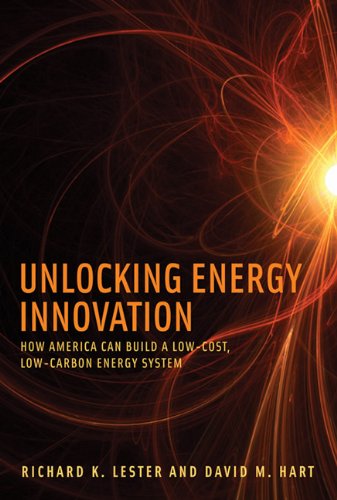
Unlocking Energy Innovation: How America Can Build a Low-Cost, Low-Carbon Energy System (MIT Press), by Richard K. Lester, David M. Hart

Download Unlocking Energy Innovation: How America Can Build a Low-Cost, Low-Carbon Energy System (MIT Press), by Richard K. Lester, David M. Hart
Locate much more experiences and also expertise by reviewing the book qualified Unlocking Energy Innovation: How America Can Build A Low-Cost, Low-Carbon Energy System (MIT Press), By Richard K. Lester, David M. Hart This is an e-book that you are looking for, isn't it? That corrects. You have actually involved the ideal website, then. We constantly offer you Unlocking Energy Innovation: How America Can Build A Low-Cost, Low-Carbon Energy System (MIT Press), By Richard K. Lester, David M. Hart and also the most preferred publications worldwide to download and install and appreciated reading. You might not dismiss that visiting this collection is an objective and even by unintended.
Yet here, we will reveal you unbelievable point to be able always review guide Unlocking Energy Innovation: How America Can Build A Low-Cost, Low-Carbon Energy System (MIT Press), By Richard K. Lester, David M. Hart anywhere as well as whenever you occur and also time. Guide Unlocking Energy Innovation: How America Can Build A Low-Cost, Low-Carbon Energy System (MIT Press), By Richard K. Lester, David M. Hart by just can help you to realize having the e-book to check out every single time. It won't obligate you to always bring the thick publication wherever you go. You can merely keep them on the gizmo or on soft file in your computer to always review the area at that time.
Yeah, investing time to review the publication Unlocking Energy Innovation: How America Can Build A Low-Cost, Low-Carbon Energy System (MIT Press), By Richard K. Lester, David M. Hart by on the internet could additionally provide you good session. It will reduce to keep in touch in whatever condition. Through this could be a lot more interesting to do as well as much easier to read. Now, to obtain this Unlocking Energy Innovation: How America Can Build A Low-Cost, Low-Carbon Energy System (MIT Press), By Richard K. Lester, David M. Hart, you can download in the web link that we give. It will certainly help you to obtain simple means to download guide Unlocking Energy Innovation: How America Can Build A Low-Cost, Low-Carbon Energy System (MIT Press), By Richard K. Lester, David M. Hart.
Guides Unlocking Energy Innovation: How America Can Build A Low-Cost, Low-Carbon Energy System (MIT Press), By Richard K. Lester, David M. Hart, from basic to difficult one will be an extremely beneficial operates that you can require to alter your life. It will not give you unfavorable declaration unless you don't obtain the significance. This is surely to do in reading a book to get over the meaning. Commonly, this publication entitled Unlocking Energy Innovation: How America Can Build A Low-Cost, Low-Carbon Energy System (MIT Press), By Richard K. Lester, David M. Hart is reviewed due to the fact that you truly such as this kind of e-book. So, you could get much easier to understand the perception as well as significance. Once again to always remember is by reviewing this e-book Unlocking Energy Innovation: How America Can Build A Low-Cost, Low-Carbon Energy System (MIT Press), By Richard K. Lester, David M. Hart, you can satisfy hat your inquisitiveness begin by completing this reading publication.
Energy innovation offers us our best chance to solve the three urgent and interrelated problems of climate change, worldwide insecurity over energy supplies, and rapidly growing energy demand. But if we are to achieve a timely transition to reliable, low-cost, low-carbon energy, the U.S. energy innovation system must be radically overhauled.
Unlocking Energy Innovation outlines an up-to-the-minute plan for remaking America's energy innovation system by tapping the country's entrepreneurial strengths and regional diversity in both the public and private spheres. "Business as usual" will not fill the energy innovation gap. Only the kind of systemic, transformative changes to our energy innovation system described in this provocative book will help us avert the most dire scenarios and achieve a sustainable and secure energy future.
- Sales Rank: #2579355 in Books
- Published on: 2013-09-13
- Original language: English
- Number of items: 1
- Dimensions: 9.00" h x .63" w x 6.00" l, .75 pounds
- Binding: Paperback
- 232 pages
Review
Richard Lester and David Hart offer a thoughtful analysis about the special challenges of innovation in energy. Their book will generate discussion and indeed debate about the relative roles of government and markets in bringing innovation about.
(Daniel Yergin, author of The Quest: Energy, Security, and the Remaking of the Modern World)Lester and Hart have perceptively described what a vastly improved U.S. energy innovation system would look like and the significant economic and environmental benefits it could deliver. Equally important, they have laid out a thoughtful initial approach to building this system over the near and long-term.
(Dan W. Reicher, Executive Director, Stanford University's Steyer-Taylor Center for Energy Policy and Finance and former U.S. Assistant Secretary of Energy for Energy Efficiency and Renewable Energy) Review
"Richard Lester and David Hart offer a thoughtful analysis about the special challenges of innovation in energy. Their book will generate discussion and indeed debate about the relative roles of government and markets in bringing innovation about." -- Daniel Yergin, author of The Quest: Energy, Security, and the Remaking of the Modern World "Lester and Hart have perceptively described what a vastly improved U.S. energy innovation system would look like and the significant economic and environmental benefits it could deliver. Equally important, they have laid out a thoughtful initial approach to building this system over the near and long-term." -- Dan W. Reicher, Executive Director, Stanford University's Steyer-Taylor Center for Energy Policy and Finance and former U.S. Assistant Secretary of Energy for Energy Efficiency and Renewable Energy
About the Author
Richard K. Lester is Japan Steel Industry Professor and Head of the Department of Nuclear Science and Engineering at MIT and Founding Director of MIT's Industrial Performance Center. He is the author or coauthor of The Productive Edge and other books.
David M. Hart is Professor in the School of Public Policy and Director of the Center for Science and Technology Policy at George Mason University. He is the author of Forged Consensus: Science, Technology, and Economic Policy in the United States, 1921--1953. He served as Assistant Director for Innovation Policy in the White House Office of Science and Technology Policy from 2011 to 2012.
Most helpful customer reviews
0 of 0 people found the following review helpful.
Four Stars
By momof4inif
This was for work of course.
6 of 6 people found the following review helpful.
Bold Ideas, Could Use More Backup Material
By Jeffrey Rissman
In "Unlocking Energy Innovation," Professors Richard Lester (MIT) and David Hart (George Mason University) argue that technological innovation in the U.S. electricity sector is the key to reducing carbon emissions and avoiding serious impacts from climate change. To generate new innovations and accelerate their uptake and deployment in the field, Lester and Hart propose numerous changes to private and public entities throughout the industry, amounting to a complete overhaul of the way electricity is produced, regulated, and distributed. The book's greatest strengths are its bold vision and its comprehensiveness: although their work is only 167 pages (excluding preface and endnotes), Lester and Hart touch on almost every aspect of the electricity industry, including basic and applied research, central and distributed generation, the smart grid, financial tools, and advanced technologies still in early development. Many of their ideas are clever, and it is easy to believe that they would be a substantial improvement over our existing system. On the other hand, in such a small book, Lester and Hart were forced to exclude some things which would have strengthened their argument. The first missing piece is political: given the urgency of reducing carbon emissions, how are we to pass the laws and make the structural changes Lester and Hart propose in a timely manner? The other element that could enhance "Unlocking Energy Innovation" is greater visibility into the research which backs the authors' recommendations. The book is the culmination of a three-year study at MIT involving numerous faculty, students, and industry experts. An enormous amount of data must have been generated, but we see little of it in the final document. Computer or financial modeling results, anecdotes from interviews with industry figures, comparisons with countries which have attempted similar policies, and other supporting material would help to convince readers that Lester and Hart's policy recommendations rest on a solid footing and would be effective if put into practice. Nevertheless, "Unlocking Energy Innovation" successfully combines many good ideas into an integrated framework, providing a vision of a future energy industry that could produce and commercialize the innovations we need to address the challenges ahead.
The initial chapters introduce the issues affecting the U.S. energy field and innovation system. The first chapter discusses the climate impacts of emissions and describes the sheer scale of the challenge ahead, setting a goal of reducing emissions by 80% in the next 40 years. The second chapter provides background on the energy sector and the innovation process. For any given technology, Lester and Hart divide the innovation process into four stages: option creation, demonstrating viability (at commercial scale), early adoption, and improvements-in-use (evolutionary refinement of the technology in a market with unrestricted competition). They indicate the need for more public funding in the early stages of a technology's lifecycle, when private firms have little incentive to invest, with declining support over time.
The majority of the book contains recommendations to enhance the prospects for innovation in the energy sector between now and 2100. During that time, there will be three "waves" of innovation, or time periods when different strategies will dominate the push to reduce electricity consumption and decarbonize the energy supply. The first wave, which begins immediately, should be characterized by a large-scale roll-out of existing, known technologies which increase energy efficiency. The second wave, involving the deployment of low-carbon electricity production (e.g. wind, solar) and carbon capture and sequestration (CCS), should be important by 2020 and will become insufficient to meet the demands of a growing population and economy around 2050. The last wave, stretching from 2050 to 2100 or beyond, is characterized by major technological advances which are far from commercialization today, such as carbon-neutral biofuels, advanced solar, and fusion power.
To help make these waves possible, the authors claim that utilities should no longer exist as vertically-integrated companies who own generation facilities, transmission lines, and home meters. Instead, they envision a system wherein today's utilities become "smart integrators," lead firms who coordinate numerous independent power producers, regional transmission organizations, demand management aggregators, future grid-scale storage providers, etc. Like an electronics maker who brings together parts manufactured by dozens of companies and assembles them into a finished product, a "smart integrator" utility would select the best of all the energy component services and package them together for its customers, who would pay a single monthly bill to the utility. It is easy to see how moving to a smart integrator model could encourage innovation: energy companies would have to compete to provide power reliably and at lower cost in order to be included in packages by smart integrator utilities, and competition can drive innovation. It is much harder to envision how today's utilities, which are slow-moving and financially conservative, could ever be convinced to abandon their existing business model and become smart integrators. One imagines a regulatory mandate would be necessary, but how should such a mandate be structured? Should it be done nationally or on a state-by-state basis? How would it gain the necessary political support? The authors do not provide a roadmap for how to get to their destination.
In the first wave of innovation, Lester and Hart highlight the great opportunities to affordably or profitably reduce emissions by improving building efficiency. They also discuss the barriers to wide-spread deployment of efficiency technologies, including split incentives (e.g. tenant vs. landlord), the cheapness of energy relative to other costs faced by companies (such as rent and personnel), and the difficulty individual homeowners encounter in securing financing for efficiency upgrades. To improve the visibility of a building's energy performance to prospective owners or tenants, the authors recommend the establishment of a nationally standardized energy labeling system. They recommend that state and local governments use building codes to require new construction to achieve a certain level of energy performance. To incentivize retrofitting of existing homes, they advocate that states and localities offer loans for energy improvements at sub-market rates, then receive repayment as part of the home's property tax bill, an approach which is currently opposed by federal mortgage lenders. The authors also suggest that utilities might play this role, adding the repayment costs to customers' utility bills. Finally, they recommend that the Department of Energy take efforts to educate construction companies about best practices in energy-efficient construction, as the U.S. building industry is highly fragmented and adopts innovations slowly. Lester and Hart's recommendations for the first wave are all realistic and achievable using existing political and financial institutions. This means that they could be implemented quickly and be in place by 2020. When judged in terms of practicality, Lester and Hart's prescriptions for the first wave of innovation are a high point of the book.
Turning to the second wave of innovation, the deployment of low-carbon energy technologies and CCS, the authors point out a funding gap in the technology lifecycle: public funds for basic research carry projects through the option creation stage, and private funds are available to achieve improvements-in-use for mature technologies, but few funding options exist to help technologies scale up and gain early adopters. To remedy this, Lester and Hart propose a system of Regional Innovation Investment Boards (RIIBs) funded through by a nation-wide surcharge of 0.2 cents per kWh, adding 2% to the average cost of electricity in the United States. The RIIBs would fill the gap in technology lifecycle, backing commercial-scale demonstration projects and the "next few" post-demonstration projects. RIIBs would choose which technologies to fund based on the energy priorities of their particular regions, the technical merit of the proposals, the extent to which proposals are funded through outside sources, etc. Finally, Lester and Hart recommend the establishment of a new Federal institution to serve as a "gatekeeper." Before any project could apply for RIIB funding, it would need to be certified by the federal gatekeeper, which would only approve projects that it believes have the potential to reduce carbon emissions and produce energy at a declining unit cost over time. Proposals would also have to be non-duplicative of work already being funded (at RIIBs or elsewhere), and the gatekeeper would de-certify proposals if progress proved too slow.
Any funding source to help technologies cross the gap from laboratory research to full commercialization would be a straightforward, positive development for the energy industry. What makes Lester and Hart's approach unique is the regional nature of the funding. This has its advantages. For instance, RIIBs might have varied funding philosophies and priorities, leading to the exploration of a wider array of approaches to decarbonization than might be pursued by a single funding agency. On the other hand, there are potential weaknesses. Each RIIB is staffed by members of energy companies within its region. RIIBs might feel great pressure to exclusively fund projects being developed within their own regions. In this way, the benefits of any commercially successful RIIB-funded innovation would accrue to the regional economy and especially to any in-region energy companies who partnered with the local technology developer (and whose members might be on the RIIB board). If each RIIB only funds projects within its region, this eliminates most of the benefits of a regional approach, resulting in isolated islands of research funding rather than a competitive, integrated network. A second issue relates to the federal gatekeeper, which has leeway to decide which projects are promising enough to certify and which should be canceled, even against the wishes of an RIIB funding the project. This gives the gatekeeper an immense amount of control over the funding system. If the gatekeeper is not well-insulated from all political pressures, a difficult task, then decisions to repeatedly re-certify poorly performing projects or to de-certify promising projects might be made for political reasons.
The authors also discuss other innovations which will become important in the second wave, particularly the "smart grid" (an electrical distribution system better able to provide utilities with information about usage patterns and respond to changing conditions) and rolling out dynamic electricity pricing (where the price per kWh changes with aggregate demand) to individual consumers. They assert that dynamic pricing, combined with smart meters or other devices to inform consumers of the price they are paying, will help to lower peak demand and enable distributed power producers who contribute to the grid at peak periods to be suitably compensated. Lester and Hart argue that the costs of all the upgrades necessary to create a smart grid, as well as the broadband internet access used by smart meters to communicate with utilities, should be funded by electric ratepayers. However, they indicate that most U.S. homes already have broadband, and 75-90% of them would see lower electric bills in response to dynamic pricing. Much of our electric grid infrastructure is old or is based on old principles, and it is reasonable that the users of the system should fund its much-needed modernization. Introducing dynamic pricing simultaneously with the costs of smart grid infrastructure could blunt the impact of rate changes for many homeowners, although the 10-25% of users whose rates would increase (sometimes substantially) might generate political opposition. Finally, Lester and Hart should consider ways to avoid the broadband internet requirement. Already, some electric meters communicate with utilities using wireless signals in a manner similar to cellular telephones. In areas with few receivers, future smart meters could communicate wirelessly with each other, sending data from meter to meter until a receiver is reached.
When discussing the third wave, Lester and Hart provide examples of potential game-changing technologies which might come of age in the 2050-2100 period, including carbon-neutral biofuels (perhaps genetically engineered organisms which produce fuel directly from sunlight and carbon dioxide, avoiding the inefficient process of photosynthesis), advanced solar (which reduces manufacturing and installation costs by "printing" solar cells onto windows or flexible sheets material), and fusion power. They call for more international cooperation in energy research, backed by stable, long-term government funding. Finally, they conclude the book with a succinct summary of the ten central features of their proposed redesign of the U.S. energy system.
In "Unlocking Energy Innovation," Lester and Hart provide a compelling view of a potential future U.S. energy system which would drive the innovation we need to significantly lessen the magnitude of climate change. Their ideas are a valuable contribution to the dialogue on this topic, presenting not only general principles (such as encouraging new entrants to the energy markets and increasing competition between players), but also specific guidelines regarding the institutions to be established, how they should be funded, and where they should apply their funds. While it is easy to envision how some of their ideas would be implemented, others--especially the conversion of existing utilities to "smart integrators" and the establishment of the RIIB/federal gatekeeper system--would require major changes in both legislation and the structure of the energy industry. It is unfortunate that Lester and Hart do not provide a political framework or implementation roadmap for their more radical ideas. In addition, more visibility into the research which went into forming the authors' recommendations would be an enhancement. Despite these omissions, their book succeeds as a succinct policy guide and a compelling vision of a U.S. energy system that could deliver the innovations we need in order to minimize climate change and set us on a path to a clean energy future.
3 of 8 people found the following review helpful.
Dissappointing and uninspiring
By John G. Bennett
Alarms went off when early on there is a claim that you need to build 120GW of low carbon power plant to make a 4% reduction in carbon emission from US electricity. Huh? Our 2010 peak consumption was 800GW, and a useful fraction of that is already low carbon. The 120GW number would be more like 20%.
But that turned out to be typical of the book. All words, no numbers, nothing solid to work with. The overall thesis is we should just create a good incentive system by improving the grid (good idea), improving conservation through ideas like smart metering (being tried, catching on only slowly), and using the tariffs to incentivise green delivery (ok). Then we just sit back and watch it happen.
Nonsense.
There is no reason we should not invest in cleaner energy. It would be cheaper (and more effective) than militarizing the world's oil and gas producers has been. Heck, with a trillion bucks we could have built a lot of wind and solar, figured out most of the technology needed for LFTR, got a solid run at diesel from algae, built some additional key links in our grid, etc. .. and had higher employment. But, government does not invest in the right thing without imagination and good advice.
This book is not how to imagine a better future. It is just more drifting along with a timid push in some useful directions, but what is described is barely above status quo. Uninspiring. At that rate we will have more wars, more global warming, more isolation, and the new power systems are all going to be invented elsewhere.
Unlocking Energy Innovation: How America Can Build a Low-Cost, Low-Carbon Energy System (MIT Press), by Richard K. Lester, David M. Hart PDF
Unlocking Energy Innovation: How America Can Build a Low-Cost, Low-Carbon Energy System (MIT Press), by Richard K. Lester, David M. Hart EPub
Unlocking Energy Innovation: How America Can Build a Low-Cost, Low-Carbon Energy System (MIT Press), by Richard K. Lester, David M. Hart Doc
Unlocking Energy Innovation: How America Can Build a Low-Cost, Low-Carbon Energy System (MIT Press), by Richard K. Lester, David M. Hart iBooks
Unlocking Energy Innovation: How America Can Build a Low-Cost, Low-Carbon Energy System (MIT Press), by Richard K. Lester, David M. Hart rtf
Unlocking Energy Innovation: How America Can Build a Low-Cost, Low-Carbon Energy System (MIT Press), by Richard K. Lester, David M. Hart Mobipocket
Unlocking Energy Innovation: How America Can Build a Low-Cost, Low-Carbon Energy System (MIT Press), by Richard K. Lester, David M. Hart Kindle
0 komentar:
Posting Komentar